
Subdued prices of food items like vegetables pulled down retail inflation for the third month in a row to 5.3 per cent in August, within the RBI's comfort zone. While the Consumer Price Index (CPI)-based retail inflation declined to 5.3 per cent in August from 6.69 per cent in the same month a year ago, food inflation dipped at a much faster pace to 3.11 per cent from 9.05 per cent in August 2020. The food inflation was also lower than 3.96 per cent in preceding month of July.
At least a 25 basis points hike can be expected on the October 5 policy

Inflation rate during August, the data for which is yet to be released, was likely to remain at about 7 per cent, said SBI Ecowrap.

Of the six-member rate-setting monetary policy committee, five members voted for a 25 bps cut while one by 40 bps, the RBI said.

Reserve Bank of India (RBI) on Friday kept the benchmark interest rate unchanged at 4 per cent and decided to continue with its accommodative stance despite rising inflation. This is the 11th time in a row that the Monetary Policy Committee (MPC) headed by RBI Governor Shaktikanta Das has maintained the status quo. RBI had last revised its policy repo rate or the short-term lending rate on May 22, 2020 in an off-policy cycle to perk up demand by cutting the interest rate to a historic low.

There is evidence of asymmetric adjustment to monetary policy

The fourth consecutive rate cut is expected to lower equated monthly instalments (EMIs) for home and auto buyers, and borrowing cost for corporate.

RBI Governor Shaktikanta Das on Friday said the government and the central bank are in discussion with South Asian countries to have cross-border trade in rupee. He also said the central bank digital currency (CBDC) is in trial phase and the RBI is moving very carefully and cautiously on digital rupee launch. After the successful launch of the wholesale pilot, the Reserve Bank of India (RBI) on December 1, last year, began its retail CBDC pilot project.

Tata Steel was the top gainer in the Sensex pack, rising around 4 per cent, followed by Infosys, Bajaj Finance, TCS, HCL Tech, ICICI Bank and Tech Mahindra. On the other hand, Bharti Airtel, M&M, L&T and Axis Bank were among the laggards.

Falling core inflation on the back of slowing economic growth is likely to create space for the Reserve Bank to ease monetary policy in the early part of the next year, rating agency Crisil said.

A three-year validity of an inflation target is, perhaps, more reasonable and practicable.

Inflation, as measured on the Wholesale Price Index (WPI), has been in the negative zone since November 2014.

Interest rate on Public Provident Fund scheme was cut to 8.1%.

He argued that if inflation is low, stable and moving towards the 4 per cent target, why has the RBI not revised downward the bank rate fixed in June 2023?

Quarterly earnings, global trends and trading activity of foreign investors will drive stock markets in this holiday-shortened week, analysts said. It will be a trading holiday on January 22, with the Maharashtra government announcing a holiday in connection with the consecration of the Ram Temple in Ayodhya. Equity markets would also remain closed on Friday for Republic Day.

By taking the mutual fund route, investors can take exposure to gilts with small amounts. Over a decade or more, returns from these funds tend to be sound.

The Reserve Bank on Friday retained the inflation forecast for 2023-24 at 5.4 per cent, and vowed to take timely measures to prevent any spillovers of global food and fuel price shocks. Stressing that the Reserve Bank has identified high inflation as a major risk to macroeconomic stability and sustainable growth, Governor Shaktikanta Das said the September retail inflation number may be lower than August and July prints. The headline inflation based on Consumer Price Index (CPI) moderated to 4.6 per cent in first quarter of 2023-24 as compared to 7.3 per cent in the same period a year ago.

The broader NSE Nifty, after scaling the day's high of 10,279.85, slipped into the negative terrain to 10,111.30 before closing at 10,128.40, down by 116.60 points

The Reserve Bank on Monday hinted at lowering interest rates saying that focus of monetary policy needs to be shifted to arrest declining growth while keeping inflation under control.

Banks submitted bids amounting to Rs 4.75 trillion, around 2.5 times of the notified amount of Rs 1.75 trillion, at the Variable Rate Reverse Repo (VRR) auction conducted by the Reserve Bank of India (RBI) on December 22, a day after the liquidity deficit in the banking system widened to Rs 2.5 trillion. In the most recent VRR auction held by the RBI on December 15, bids totaling 2.7 times the notified amount were received. Banks secured Rs 1 trillion at a weighted average rate of 6.63 per cent.
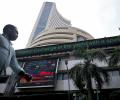
RBI policy, macro data, company earnings to decide market course this week: Experts

Retail investors have become a force to reckon with in the last 10 years with their ownership of Indian equities rising 800 basis points, or 8 per cent, to 23.4 per cent during this period, suggests a recent note from Morgan Stanley. This number, Morgan Stanley said, is set to rise in the next few years as Indian households are still underinvested in equities. India's demographics, policy framework, investor education and modest positive real rates, it said, will fuel the 'equity cult' in India.

Gaurav Garg, head of research at CapitalVia Global Research Limited will answer your stock market queries.

A reversal of policy at this juncture could jeopardise the recent gains on inflation

The Indian economy is projected to grow at 6.3 per cent in current financial year aided by investment and domestic demand. According to a World Bank report released on Tuesday, India continues to show resilience against the backdrop of a challenging global environment. In India, which accounts for the bulk of South Asia region, growth is expected to remain robust at 6.3 per cent in 2023-24, India Development Update of the World Bank said.

Reserve Bank Governor Shaktikanta Das on Wednesday said underlying economic activity in India continues to be strong, but external factors will cause some "dent" to the economy. Speaking at the BFSI Insight Summit 2022 organised by Business Standard, Das said the RBI tracks 70 fast moving indicators and most of them are in the "green box". It is the external sector, mired by a fear of recession or clear visibility about slowing growth in a large part of the world, where the challenges lie, he said, adding that the impact of external demand will "dent" the economy.
The RBI is not statutorily independent from the government but has long enjoyed wide latitude

The RBI, which started exiting its easy money policy stance since October last, is widely expected to hike key short-term lending (repo) and borrowing rates (reverse repo) by 0.25 per cent at its quarterly policy review on July 27.

What stood out in his 15-year journey as a member of the political executive at the Centre was his glowing record as India's most successful and effective finance minister. Both as prime minister and finance minister, he understood the importance of gradualism, except when the economy or the polity was in a crisis.

India's GDP may turn positive at 1.3 per cent in the third quarter of 2020-21, having witnessed contraction in the previous two quarters due to the coronavirus pandemic, as the number of cases is falling and public spending has started rising, according to a report. The government will release the GDP numbers for the October-December quarter of the current fiscal on Friday. Projecting that the gross domestic product (GDP) may have returned to the black in the last quarter of the calendar year 2020, DBS Bank in the report said the full-year growth in real terms may be at a negative 6.8 per cent.

Raghuram Rajan on February 2 left the key interest rate unchanged.

Snapping its declining trend, retail inflation rose to a three-month high of 5.55 per cent in November on firming food prices, including vegetables and cereals, though it remains within the RBI's comfort zone of less than 6 per cent. Inflation based on the Consumer Price Index (CPI) was 4.87 per cent in October and 5.88 per cent in November 2022, the government data released on Tuesday showed. The previous high was 6.83 per cent in August and inflation had been on a decline since then.

Capital expenditure by Indian companies is likely to see an uptick in the upcoming quarters as capacity utilisation has surpassed the critical threshold of 75 per cent, and numerous companies have deleveraged their balance sheets, according to analysts. The first quarter of the current financial year has shown improved profitability, driven by a decrease in input prices. This, according to analysts at Care Ratings, should stimulate a revival in the private capex cycle.

A combination of factors, including heavy investments in US Treasury bonds and dollar sales at a healthy profit, facilitated the Indian central bank in transferring a record surplus of Rs 2.11 trillion to the government for 2023-24 (FY24). The RBI's dollar purchases increased in FY24, supported by robust capital inflows endorsing the economy's health.

Pressure has been mounting on the Reserve Bank of India to cut interest rates in the wake of declining retail inflation and the need to fuel growth momentum. However, the RBI will have to do a tightrope walk as globally interest rates are inching upwards.

The main reason was that CPI inflation would likely remain below 4 per cent till July.

The RBI interest rate decision, industrial production data for June and the ongoing quarterly earnings from corporates would largely drive the stock markets this week, analysts said. Other major factors such as global market trends, the movement of oil prices and the trading activity of foreign investors would also influence trading, they added. "The market will have an eye on the RBI Monetary Policy Committee (MPC) meeting, which will be announced on August 10, 2023. We are heading towards the last batch of Q2 earnings of key companies such as Adani Ports, Coal India, Hero MotoCorp, Hindalco and ONGC, among others, which will lead to stock-specific movement," said Pravesh Gour, senior technical analyst, Swastika Investmart Ltd.
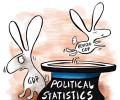
The SBI report, however, said the economic growth rate will pick up pace in 2020-21 to 6.2 per cent.

'Investors looking at the next 6-12 months can be certain that the Fed will maintain its easing cycle, and we expect the overall environment to be conducive for fixed income investments for portfolio diversification.'

Reliance Industries was the top gainer in the Sensex pack, rallying nearly 4 per cent, followed by Infosys, Tech Mahindra, HCL Tech, TCS and L&T.
